In the spring of 2025, Khentrul Ngawang Lhundrup accomplished 108 days of meditating in wild places (Tib. gnyan sa) in the mountains of Yomo. Here is the beginning of a forthcoming book about this journey:
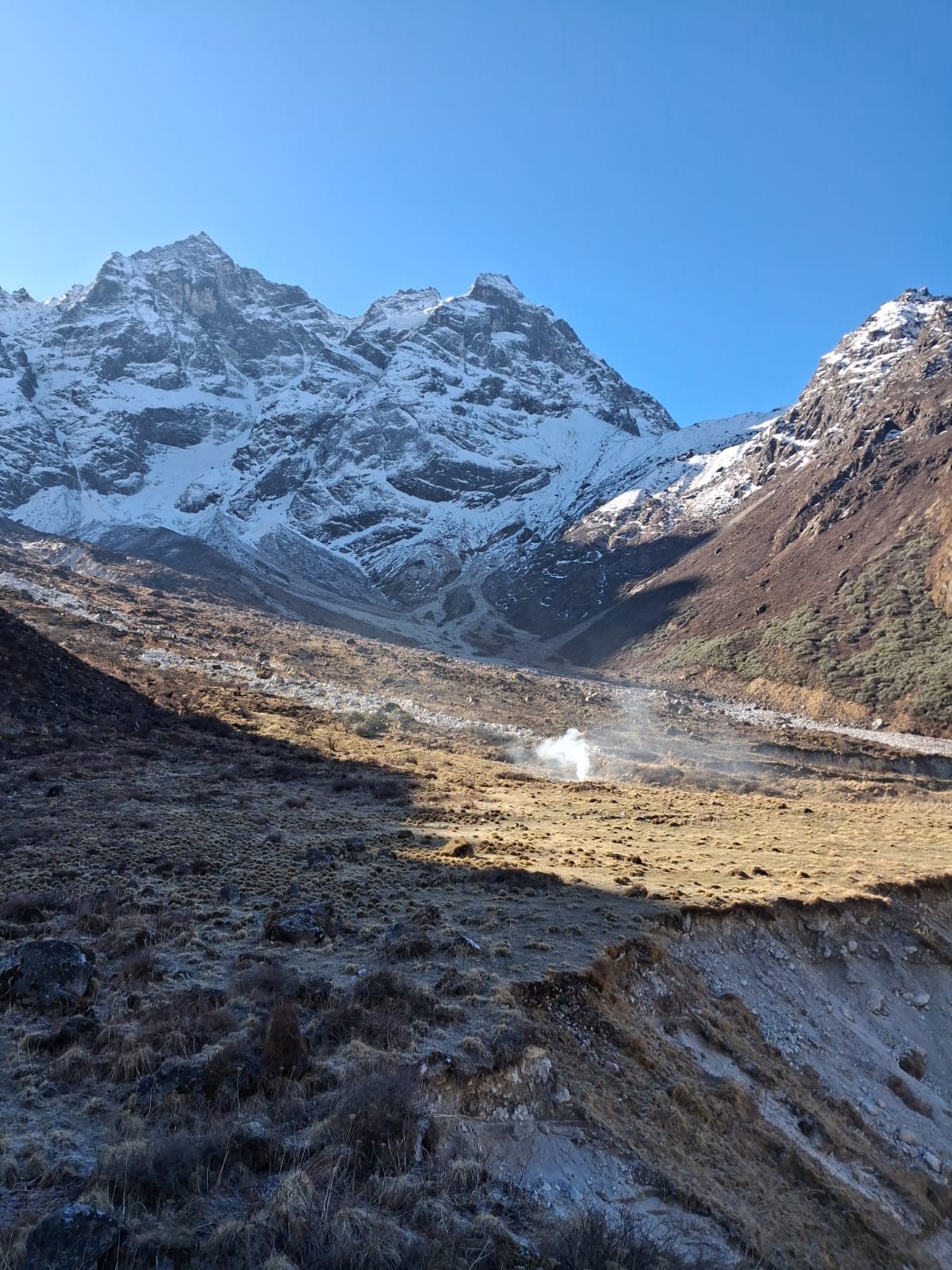
It was early in the morning, high up in the mountains of Yolmo, and the first sun rays slowly warmed my freezing face. I was standing in the open space of the valley of Palmothang. Although tired, the frost layered ground was too cold to sit on. The sky was crisp and clear, the air felt very cool. I gazed at the bright blue sky. There were a few birds drawing their circles. They looked regal and lonesome in the immense sky. It was still except for the distant recitations of Khentrul Ngawang Lhundrub. White smoke rose from the riwo sangcho fire in the distance. All these impressions blended into a feeling of awe and gratitude for the extraordinariness of the moment. Soon I would walk over and together we’d chant and dance the Khandro Gegyang ritual which was our daily commitment during the Nyensa journey. But for the moment, everything was still in my mind. No longing, no memories, no rejection, just being there in the immense openness and freshness of the moment.

Nyensa Khyam (gnyan sa ‘khyams)
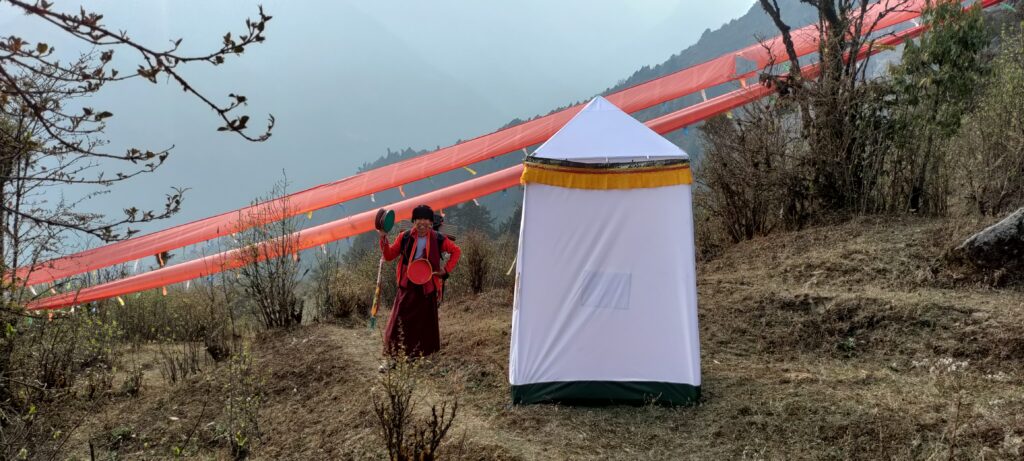
Nyensa khyam (gnyan sa ’khyams) literally means “roaming wild places” and refers to an aspect of the gcod practice of cutting ego clinging. The word nyansa (gnyan sa) literally means “wild place.” The dictionaries give “savage, rugged country, rough terrain, haunted, frightening place with malicious spirits” as possible translations. It denotes primarily charnel grounds but also water springs, river shores, or remote jungles that are believed to be inhabited by demons and therefore feared by humans. These places are conducive to spiritual practice. Nyensa khyam has been presented in the Longchen Nyingthik (klong chen snying thig) tradition as a practice involving cham (‘cham) dances, three nightly and one daily chod (gcod) sessions in a special tent, wearing special gear and changing locations in one hundred and eight consecutive nights.
Many years ago, Khentrul Ngawang Lhundrup promised in the presence of his teacher Chatral Rinpoche that he would accomplish a nyensa of one hundred and eight charnel grounds. In the wood snake year 2025, the conditions to fulfill his commitment finally came together. The group of retreatants who, under his guidance, completed the three-year retreat in Yangthro Chöling, better known as Neding, had left to rejoin their families. He was free to leave the retreat place in the hands of a caretaker and his mother. On April 3, 2025, he began his nyensa, leading a small group of chod practitioners and helpers.
They began by chosing four locations in the vicinity of Neding to set up their tents, namely one near a creek, one on a windy hill next to a cow house, one on a slope near the self-arisen conch (dung rang ‘byung), and one under some old cedar trees. Although the tents were set up out of sight from one another, the chod commentary also states that the practitioners should not be able to hear another damaru or kangling, but this was difficult to realize in the otherwise silent nights. To prepare for the practice, Khentrul Rinpoche and his students studied the sādhana text and various commentaries for several weeks.
Chod
The practice of chod means, literally translated, “cutting through, severing”), referring to the cutting of the attachment to one’s body as an expression of ultimate liberation from all attachments whatsoever. In the Kagyü school, chod is known as the practice tradition founded by the 11th century meditation female master Machig Labdron (ma gcig lab sgron). However, in the Nyingma school, chod is presented as a terma of Guru Rinpoche, who also is the central figure of the sadhana.
The Practice of Khandro Ged Gyang ༄༅། །གཅོད་ཡུལ་མཁའ་འགྲོ་གད་རྒྱངས།
The practice of Khandro Ged Gyang (mkha’ ʼgro gad rgyangs) is the chod practice of the Khandro Nyingthik tradition, revealed by the terton Jigme Lingpa (‘jigs med gling pa, 1730-1798). The first commentary Khentrul Rinpoche taught was “The Excellent Vase of Nectar, the Secret Treasury of the Ḍākinīs,” (klong chen snying thig gi gcod yul mkha’ ‘gro gad rgyang gi ‘grel pa mkha’ ‘gro’i gsang mdzod bdud rtsi bum bzang)
This commentary on the practice of chod composed by Rigdzin Nangdze Dorje (rig ‘dzin snang mdzad rdo rje, TBRC P6095, a student of Shabkar Tsokdruk Rangdrol).
Khentrul Rinpoche pointed out that although Khandro Gad-Gyang was generally translated as the Dākinī’s Resounding Laughter, this wording was misleading. The word gad rgyang did not refer to loud laughing but evoked spaciousness, maybe infinity. Other teachers and translators seem to indicate the difficulty of finding an appropriate translation, other than laughter. (See for example Tony Duff or Lama Wangdu’s translators). To attempt an approach to Khentrul Rinpoche’s interpretation, the practice will be called the Ḍākinīs’ Vast Laugh in this manuscript.
Although the meditation necessitates a rather complicated set-up and the familarization with worlds of mountain gods, demons, lords of the lands, nagas, gods and other invisible beings, the essential purpose of this practice, is, in the words of Machik Lapdron (ma gcig lab sgron, 1055–1149), celebrated founder of this practice apart from the Nyingma School, the severing of grasping to the existence of a permanent soul or self.
མ་ཅིག་ཞལ་ནས། ཕྱི་སྣང་བ་ཡུལ་གྱི་རི་མོ་གཅོད། ནང་འཛིན་པ་སེམས་ཀྱི་འཁྲུལ་པ་གཅོད། བར་ལུས་སེམས་གཉིས་ཀྱི་གཅེས་འཛིན་གཅོད།
As Machik said: “Outwardly, cut the images of objects that appear. Inwardly, cut the delusions of the grasping mind. Between, cut self-grasping at body and mind.“[1]
[1] Rigdzin Nangdzé Dorje (rig ‘dzin snang mdzad rdo rje), “The Excellent Vase of Nectar, the Secret Treasury of the Ḍākinīs,” on the “Cutting Through, the Ḍākinīs’ Resounding Laughter.” (klong chen snying thig gi gcod yul mkha’ ‘gro gad rgyang gi ‘grel pa mkha’ ‘gro’i gsang mdzod bdud rtsi bum bzang), 421,1. (TBRC W19703)
©Khentrul Ngawang Lhundrup. Use of this text only with written permission of the author. For inquiries, please contact us at neding.yolmo@gmail.com