The life stories of great masters can be told in many different ways. In Tibetan culture, people do not talk about a “biography” but say “namthar” which means “complete liberation.” The stories of a great master’s life are not told for the sake of dry historical recording but for giving inspiration – inciting others to engage in spiritual practice, to emulate the masters. To tell an inspiring story means for some people to omit all struggles or weak points in a lama’s story. For others, it is the opposite: When they learn that also very advanced practitioners struggle in life, they want to learn how they overcame those challenges, and they feel inspired to transform their own ordinary lives into the path of a yogin.
Here, we want to present you both styles of telling Khentrul Rinpoche’s life. We will start will the traditional one:
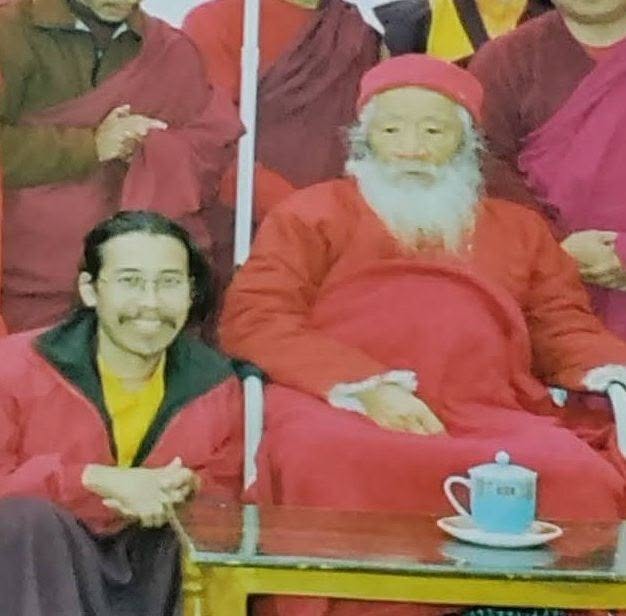
Namo Guru Buddha Vajra Śrī Tīkṣṇa Khnaya!
The authentic embodiment of the Buddhas of the three times—Vajradhara, the Lotus Lord Padmasambhava—has appeared in this world as an emanation. The Vidyādhara King, the supreme wisdom body, Jadral Buddha, may he continue to nurture this world.
With respectful homage at the outset: within this Sahā world-system, the appearance of thousands of lotuses upon an ocean has been prophesied as a sign of the manifestation of one thousand Buddhas. In accordance with these prophecies, the present Buddha, the Blessed One Śākyamuni, appeared in this world. Every Buddha accumulates immeasurable merit over countless eons until the attainment of complete enlightenment. Thereafter, through the performance of the Twelve Deeds, each Buddha benefits all sentient beings.
The Buddha was first born in a celestial realm as a divine prince in the form of a sacred white light. At that time, he appointed Maitreya as his regent. Having bestowed the five great effects, he then entered the womb in the form of a royal white elephant with six tusks. Subsequently, he was born in the sacred Lumbini Garden, accompanied by thirty-two auspicious signs. From the perspective of worldly beings, he mastered the sixty-four arts and ruled the kingdom with sixty thousand queens and attendants. After witnessing the four forms of suffering—birth, aging, sickness, and death—he renounced worldly life. He departed for the forest in search of purity, shaved his hair, and adopted the vows of a monk. Practicing severe austerities near the Nairañjanā River, he sought ultimate truth. After many years of discipline, he attained full enlightenment beneath the Bodhi Tree, overcoming all manifestations of Māra and realizing the Four Kāyas. At the request of the gods, the Buddha then turned the Wheel of Dharma three times. Finally, in the town of Kuśinagara, he delivered his last teaching and entered into complete parinirvāṇa.
As stated in Nyi Da Kha Jyor (The Coalescence of Sun and Moon):
“If one does not understand the narrative through reasoning, then in the age of degeneration, the Kali Yuga, the profound secret teachings may be rejected due to lack of faith.”
What follows is a brief life account of Venerable Khenpo Ngawang Lhundrup, the incomparable and illustrious ornament of the noble Saṅgha, and a support for the welfare of all sentient beings.
North of the sacred site of Bodh Gayā, where the Buddha attained enlightenment, and near Maratika—renowned as the blessed site of Guru Padmasambhava, the Second Buddha—lies a place called Shorong Village in Okhaldunga District of eastern Nepal. Nearby is my native village, Pangtekleg. I was born in my grandfather’s village, Lhakhog, as the son of Dorje Thiley and Chokpa Lhamo. My birth took place on a Tuesday, the 30th day of the first lunar month in 1967, at 10:00 a.m. My mother experienced no pain and was unaware at the moment of my birth. Remarkably, at the same time, a horse, a sheep, and a cow were also born—an auspicious symbol of the equality of all sentient beings.
At the age of five, though lacking apparent brilliance, yet supported by past aspirations and karmic fortune, I began learning to read and write under the guidance of my maternal grandfather, Lama Kyid Pa, with the intention of benefiting all sentient beings in general and the Buddha Dharma in particular. I later received empowerments of peaceful and wrathful deities from Lama Ngawang Sherab and was granted the vows of the four root precepts. I then resided at Thupten Chöling Monastery, founded by Thrulshik Rinpoche, until the age of eight. During this period, I studied under His Holiness Dilgo Khyentse Rinpoche and received pith instructions and oral transmissions.
As stated in the Jātakas:
“From the heart of the gracious Guru, may I be empowered to fulfill the path as instructed.”
At the age of nine, with great auspiciousness, I was given the opportunity to receive sustained guidance from His Holiness Thrulshik Zhadeu Ngawang Chökyi Lodrö Rinpoche for several years. Again, as the Jātakas state:
“One should follow many learned masters as one’s teachers, listen to diverse Sūtra and Tantra teachings with both reasoning and intuition. To guide others, one must rely on the Sūtras. Without mastery of the five sciences, enlightenment remains as distant as the horizon.”
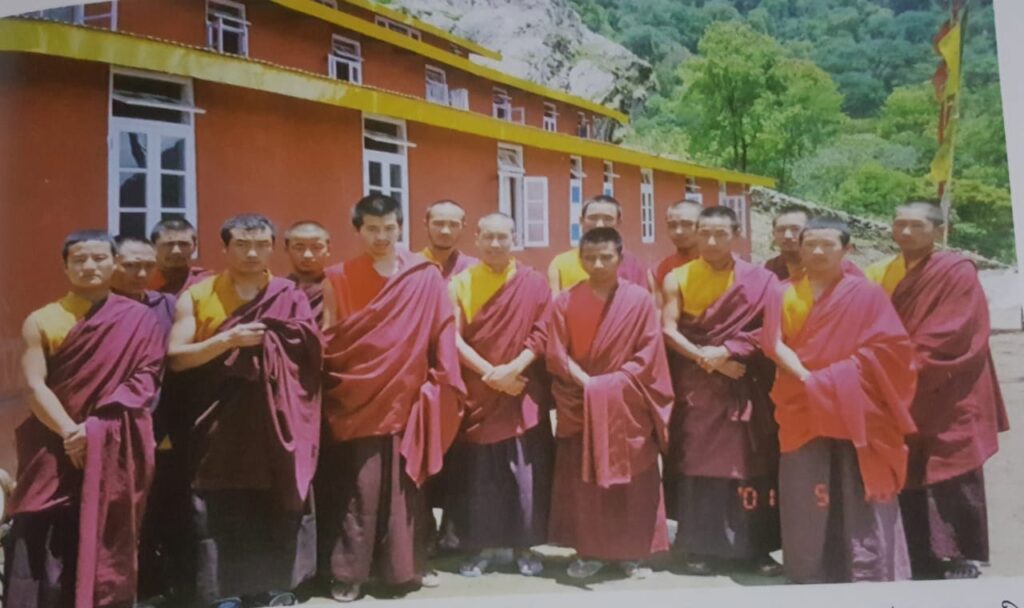
I later traveled to Kathmandu to pursue advanced philosophical studies and enrolled in the Ngagyur Nyingma Institute, founded by Tharthang Chötrul Kunga Gyaltsen and administered by the great abbot Khenchen Rigzin Dorje, an incomparable scholar of Sūtra, Tantra, and allied scriptures. Following his example, I consistently achieved first rank in my class throughout my studies. Upon completion, I was appointed as a teacher at the same institute in 1996.
During this period, I received the Rinchen Terdzö empowerments from His Holiness Penor Rinpoche and oral transmissions from Shechen Rabjam Rinpoche. In 1996, I also received the Kālacakra empowerment from His Holiness the Fourteenth Dalai Lama, Nobel Peace Prize Laureate. Since then, I have been fortunate to receive teachings from His Holiness on an annual basis.
From His Holiness Kyabjé Taklung Tsetrul Rinpoche, I received the profound empowerments and oral transmissions of the Northern Treasures (Jangter), the collected works of Mipham Rinpoche, and seven volumes of Longchenpa’s teachings, among others. I also received the root empowerments of the Heart Essence scriptures from His Holiness Dodrupchen Rinpoche, as well as initiations from other eminent masters, including His Holiness Sakya Trizin Rinpoche.
In 2001, following the instruction of His Holiness Chatral Sangye Dorje Rinpoche, I entered a three-year retreat at Martam Hermitage in South Sikkim—a sacred site blessed by the great yogi Sangye Nyida—at Theg Tse Mindrol Samten Ling, a retreat center founded by Chatral Rinpoche. There, I completed the Heart Essence of the Lotus Life retreat, a comprehensive sādhana collection rooted in Abhidharmasamuccaya. Upon completion, I was awarded a certificate under the direct guidance of His Holiness Chatral Rinpoche.
I graduated from Ngagyur Nyingma Institute in 2006 and formally entered the Khenpo lineage in 2012.
At present, my sole aspiration is to serve the Buddha Dharma by transmitting the Buddha’s teachings for the benefit of all sentient beings. Having abandoned negative mental states such as attachment to others’ wealth and miserliness toward one’s own possessions, my aim is to follow the deeds of the holy beings of the past. As stated in the Precious Treasury:
“Faultless gurus endowed with excellent qualities are equal to the Buddha himself. In this fortunate aeon, respectfully honor and follow these sublime beings.”
Therefore, I resolve to follow the path of the holy ones who preceded me for as long as space endures. As it is said:
“Through the Guru’s blessing, the doors to the lower realms are closed. By enduring all hardships, one comes to truly understand the profound and vast life story of the Guru.”
With this understanding, free from doubt and confusion, I have written this autobiography. Though it represents only a very small portion of my life—like the tip of a blade of grass—I composed it at the request of my benefactor, T. J. Chong, at Boudhanath Stupa in Kathmandu. I humbly apologize to all learned scholars for any errors that may be found in this brief account and ask for their indulgence and goodwill.
May the power of the glorious Guru long endure.
May the benefactors of the Dharma flourish.
May the Dharma never decline but continually increase.
May the lotus-born Dharma spread and flourish for the benefit of all beings.
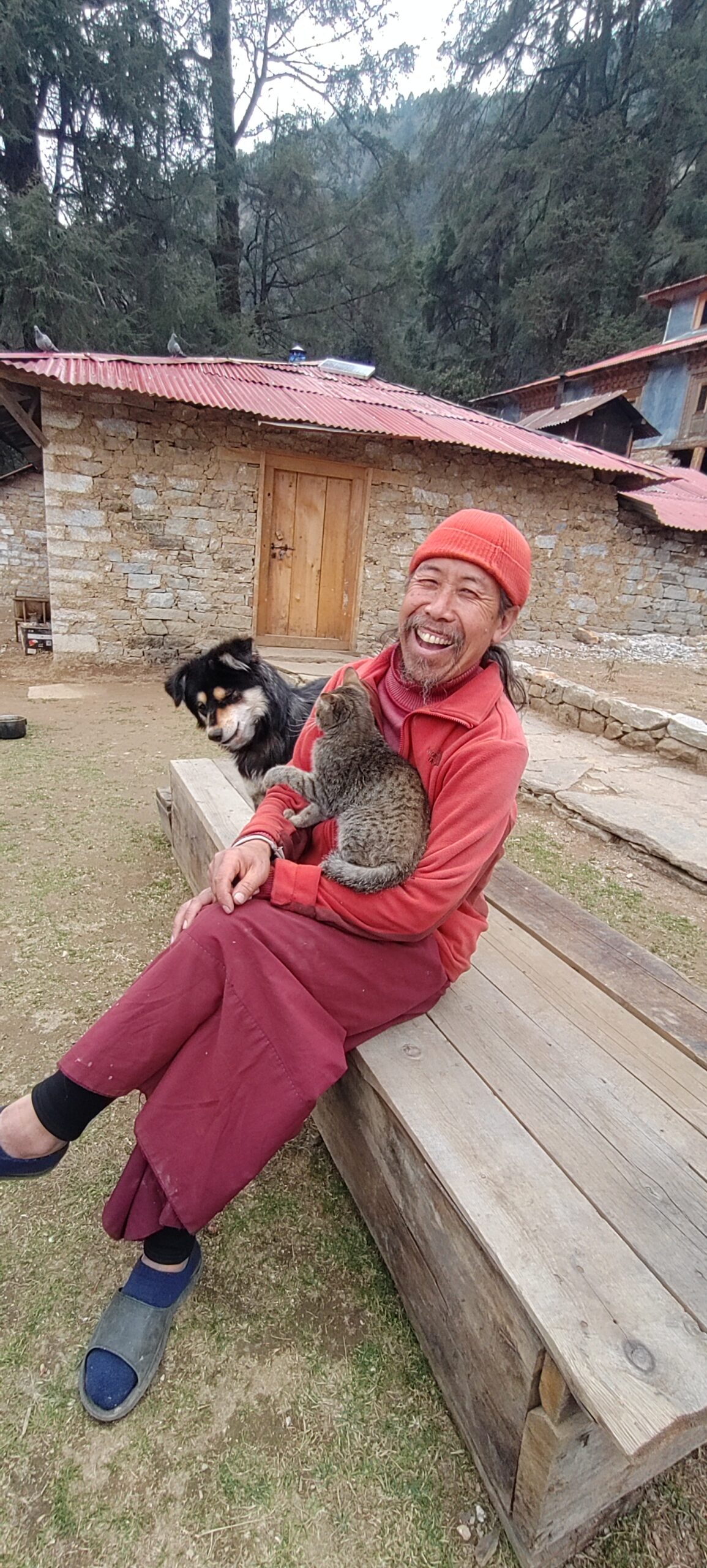
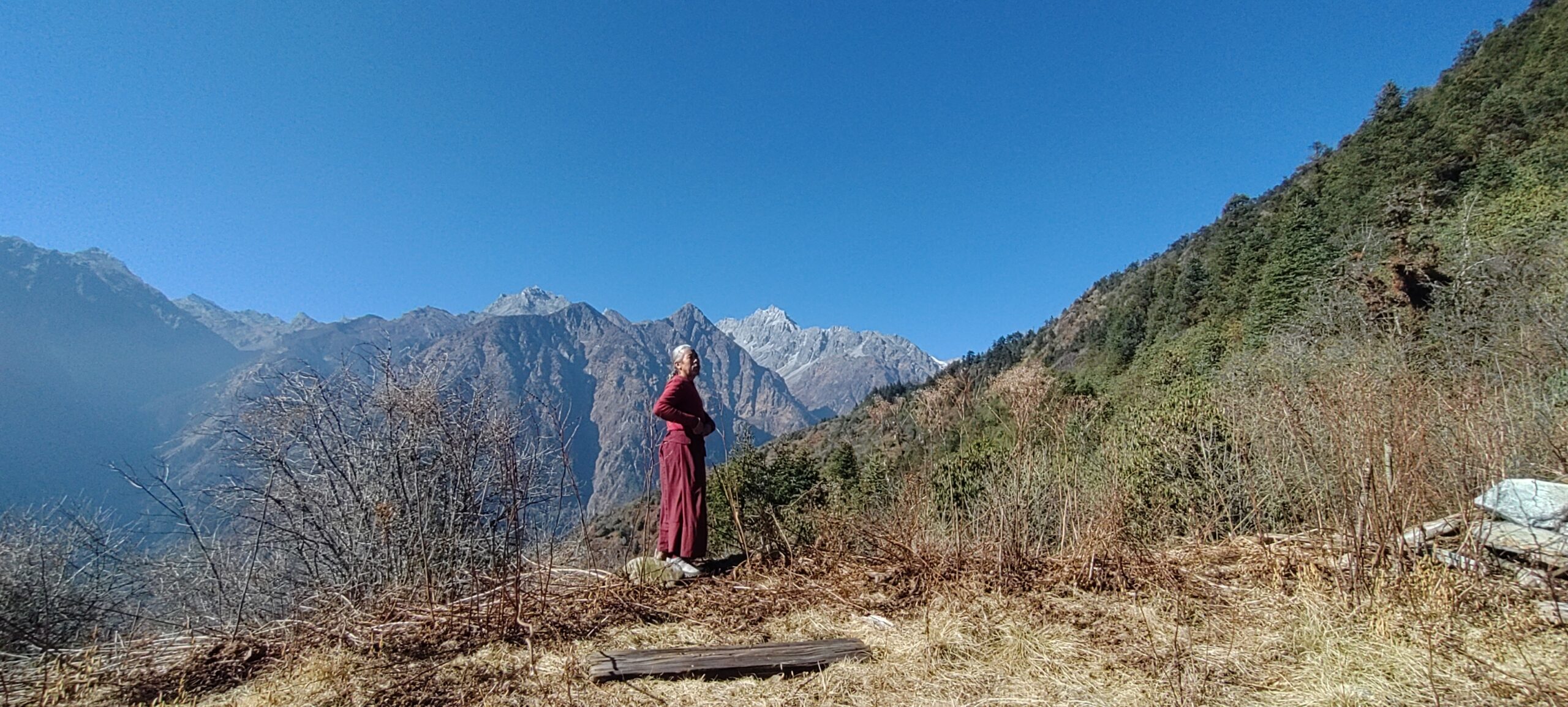
More stories in a less traditional way of story telling will follow….